
• Software
    • DNASTAR Lasergene
      • Lasergene Molecular Biology
      • Lasergene Genomics
      • Lasergene Protein
  • Workflows
    • Molecular Biology Workflows
      • Automated Virtual Cloning
      • Clone Sequence Verification
      • ELN Integration
      • Gel Electrophoresis Simulation
      • Gene Homology Alignment
      • Multiple Sequence Alignment
      • Pairwise Sequence Alignment
      • PCR Site-Directed Mutagenesis
      • PCR Primer Design
      • Phylogenetic Analysis
      • Plasmid Maps
      • Sanger Sequence Assembly
      • Sequence Editing and Annotation
  • Protein Analysis
    • Antibody Modeling
    • Antibody Phage Display
    • Epitope Prediction
    • Protein Docking
    • Protein Sequence Analysis
    • Protein Stability Prediction
    • Protein Structural Alignment
    • Protein Structure Analysis
    • Protein Structure Prediction
  • Genomics
    • Clinical Research
    • De Novo Genome Assembly
    • Mauve Genome Alignment
    • Metagenomic Assembly
    • Variant Analysis
    • Viral Genome Analysis
    • Whole Genome/Whole Exome
  • Transcriptomics
    • ChIP-Seq Data Analysis
    • De Novo Transcriptome Assembly
    • RNA-Seq Alignment
  • Services
    • Protein Services
    • Genomic Services
  • Pricing
  • Resources
    • KNOWLEDGE CENTER
      • User Guides and Tutorials
      • Product Literature
      • Product Releases
      • Product Notifications
      • Supported File Formats
      • Technical Requirements
      • Citations
    • WEBINARS & EVENTS
    • BLOG
    • LICENSING OPTIONS
  • About
    • Careers
    • Distributors
    • Legal Information
    • Privacy Policy
  • Contact
  • Free Trial

Lasergene 19.0 Release Notes

REQUEST FREE TRIAL
MY ACCOUNT
DNASTARDNASTAR
  • Software
    • DNASTAR Lasergene
      Full Suite
    • Lasergene Molecular Biology
    • Lasergene Genomics
    • Lasergene Protein
  • Workflows
    • Molecular Biology
      • Automated Virtual Cloning
      • Clone Sequence Verification
      • ELN Integration
      • Gel Electrophoresis Simulation
      • Gene Homology Alignment
      • Multiple Sequence Alignment
      • Pairwise Sequence Alignment
      • PCR Site-Directed Mutagenesis
      • PCR Primer Design
      • Phylogenetic Analysis
      • Plasmid Maps
      • Sanger Sequence Assembly
      • Sequence Editing and Annotation
    • Protein Analysis
      • Antibody Modeling
      • Antibody Phage Display
      • Epitope Prediction
      • Protein Docking
      • Protein Sequence Analysis
      • Protein Stability Prediction
      • Protein Structural Alignment
      • Protein Structure Analysis
      • Protein Structure Prediction
    • Genomics
      • Clinical Research
      • De Novo Genome Assembly
      • Mauve Genome Alignment
      • Metagenomic Assembly
      • Variant Analysis
      • Viral Genome Analysis
      • Whole Exome/Genome Sequencing
    • Transcriptomics
      • ChIP-Seq Data Analysis
      • De Novo Transcriptome Assembly
      • RNA-Seq Alignment and Analysis
  • Services
    • Protein Services
    • Genomic Services
  • Pricing
  • Resources
    • KNOWLEDGE CENTER
      • User Guides and Tutorials
      • Product Literature
      • Product Releases
      • Product Notifications
      • Supported File Formats
      • Technical Requirements
      • Citations
    • WEBINARS
    • NEWS AND EVENTS
    • BLOG
    • LICENSING OPTIONS
  • About
    • Careers
    • Distributors
    • Legal Information
    • Privacy Policy
  • Contact
  • Search
  • Free Trial

Somatic Variant Calling Made Accessible with Mutect2 in Lasergene

Somatic variant calling is a critical but complex step in cancer genomics, where the challenge lies in distinguishing true low-frequency mutations from germline variation and sequencing noise. Standard diploid exome data may contain thousands of apparent “variants” that mimic somatic mutations, often generating high false positives with basic callers. Mutect2, part of the Broad Institute’s trusted GATK toolkit, is specifically designed to overcome these challenges. Built on a Bayesian genotyping model and the assembly-based machinery of HaplotypeCaller, Mutect2 delivers high-accuracy detection of rare somatic mutations. Now available within Lasergene Genomics, this powerful algorithm is fully supported in an intuitive environment—making advanced cancer genomics more accurate and accessible to every lab.

Mutect2 Workflows in SeqMan NGen

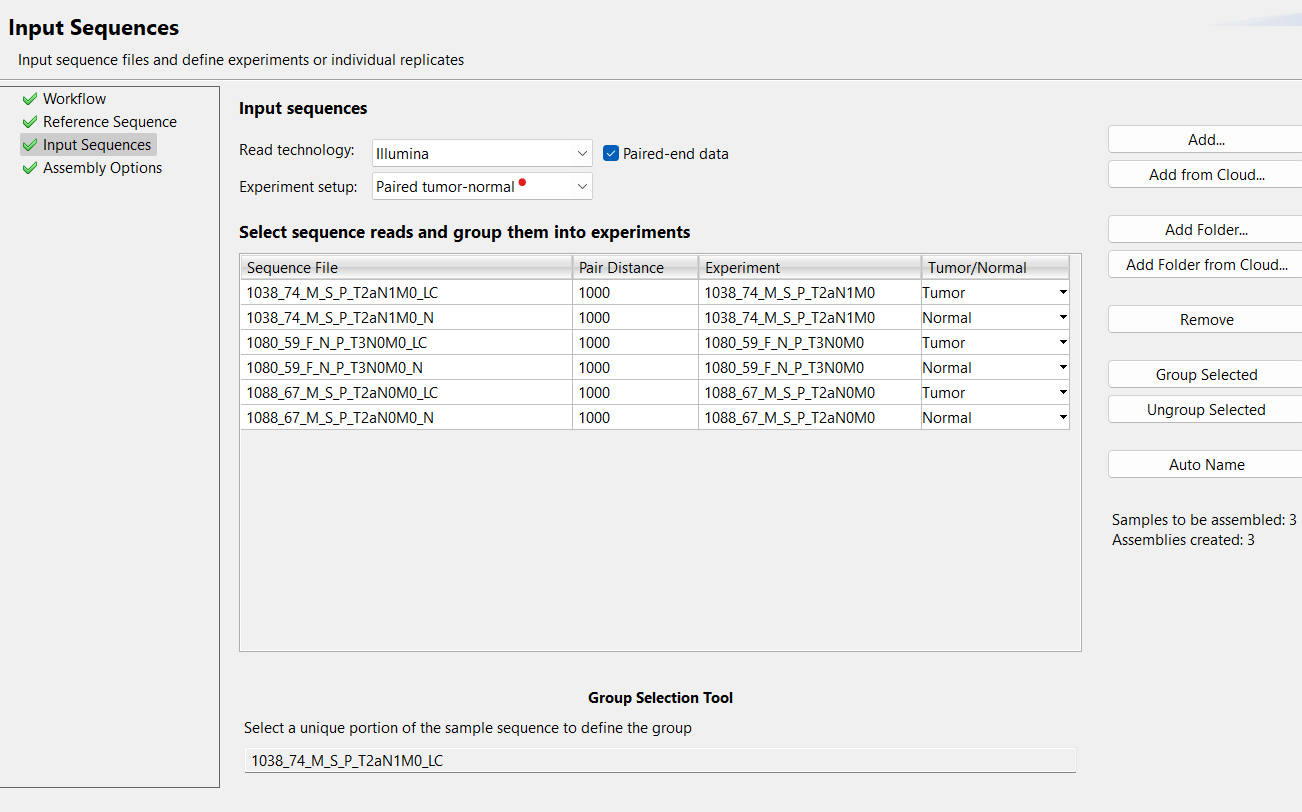
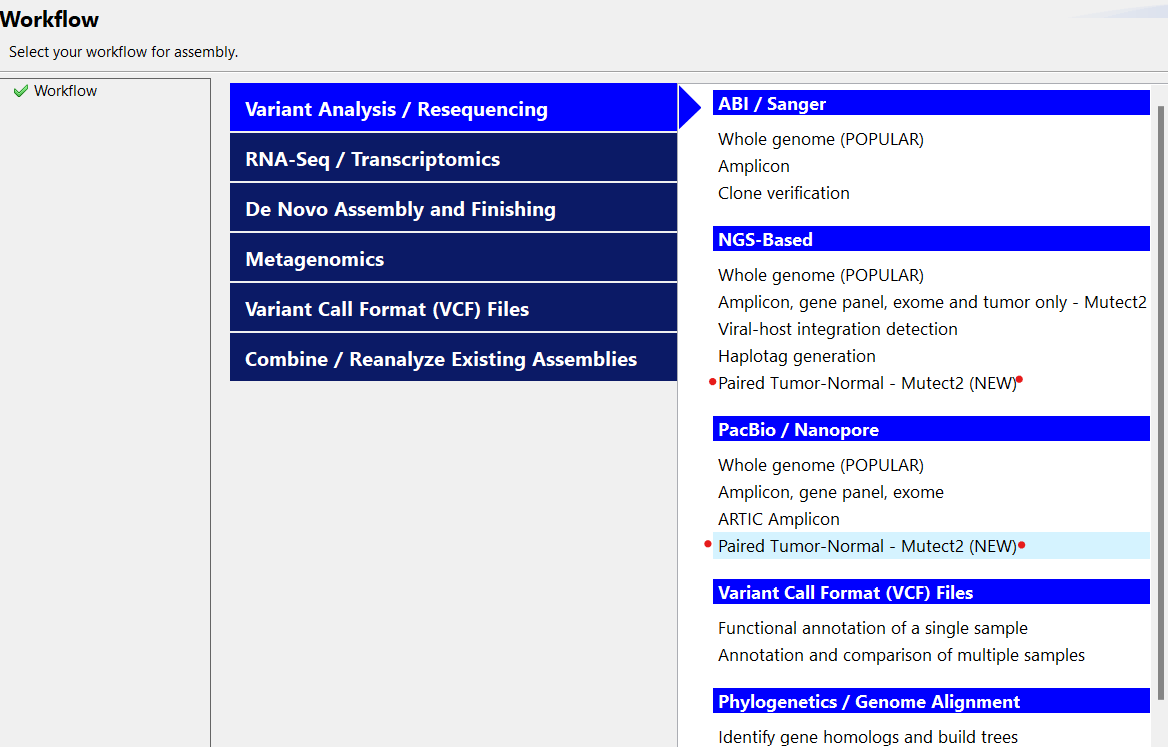
When setting up a Mutect2 workflow in SeqMan NGen, you can choose between two experiment types, depending on the data you have available:

  • Paired Tumor/Normal (Mutect2): Select this option when you have both tumor and matched normal samples. SeqMan NGen automatically assigns tumor and normal files (based on naming conventions like _t, _c, _tumor, _cancer, etc.), making setup quick and error-free. This approach provides the highest accuracy, as the matched normal helps exclude germline variants from your results.
  • Tumor-only (Mutect2): Choose this option when you only have a tumor sample. SeqMan NGen leverages the GnomAD allele frequency database to build a local Panel of Normals (PoN), helping to filter out germline variants and sequencing noise. The software handles downloading and integration of the correct GnomAD reference automatically, so you can focus on your analysis.

No matter which workflow you choose, the SeqMan NGen Wizard simplifies the process. From experiment setup to analysis options, every step is guided, so you can run Mutect2 without command-line scripting.

Enhanced Visualization in GenVision Pro

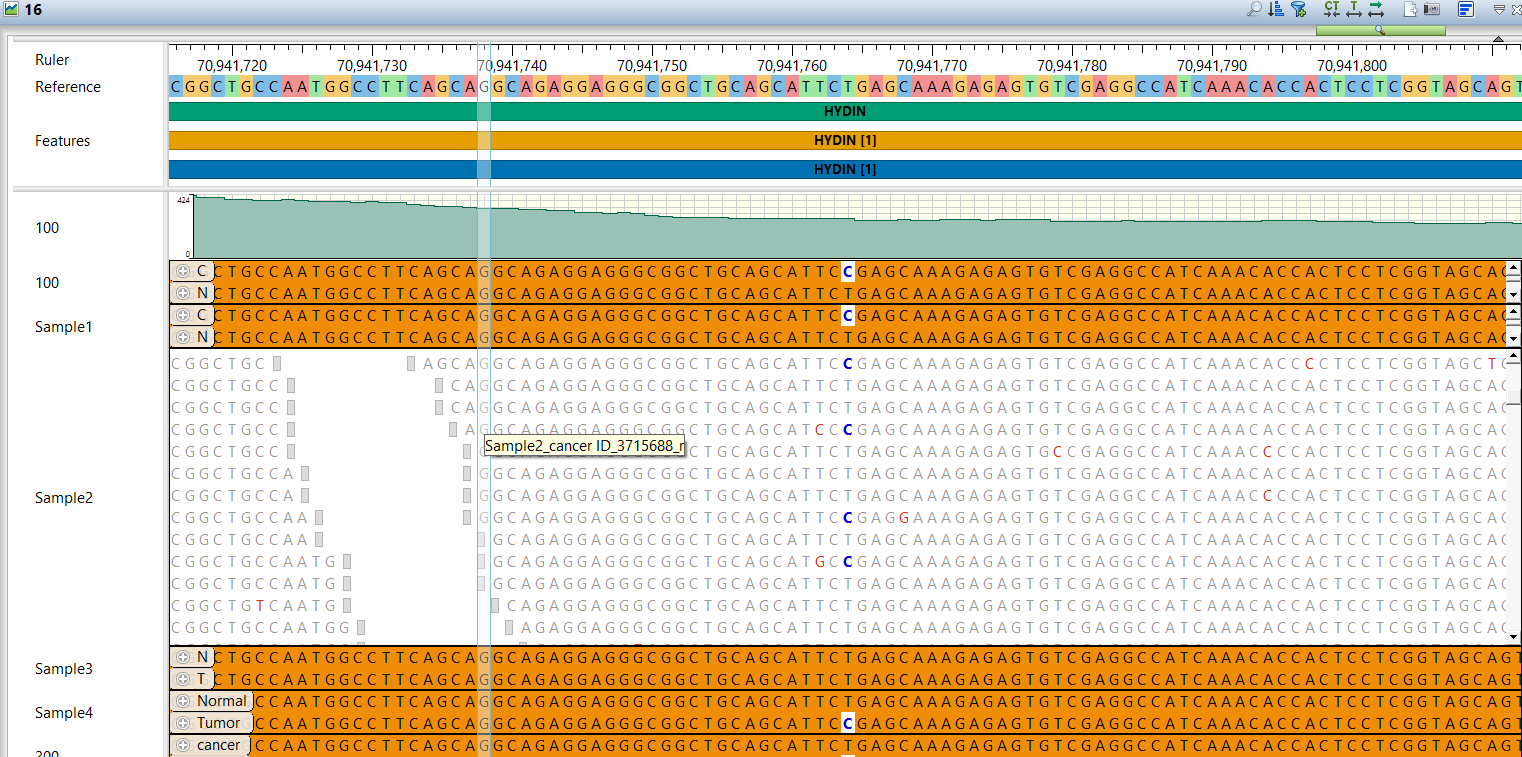
GenVision Pro now includes dedicated visualization for paired tumor/normal data. Alignment tracks for tumor and normal samples can be expanded or collapsed, making it easy to compare side-by-side. Collapsed tracks display called variants directly in orange, providing a clear overview of mutation hotspots. This feature offers a level of visual clarity not available in other analysis platforms.
Powerful Filters and Metrics

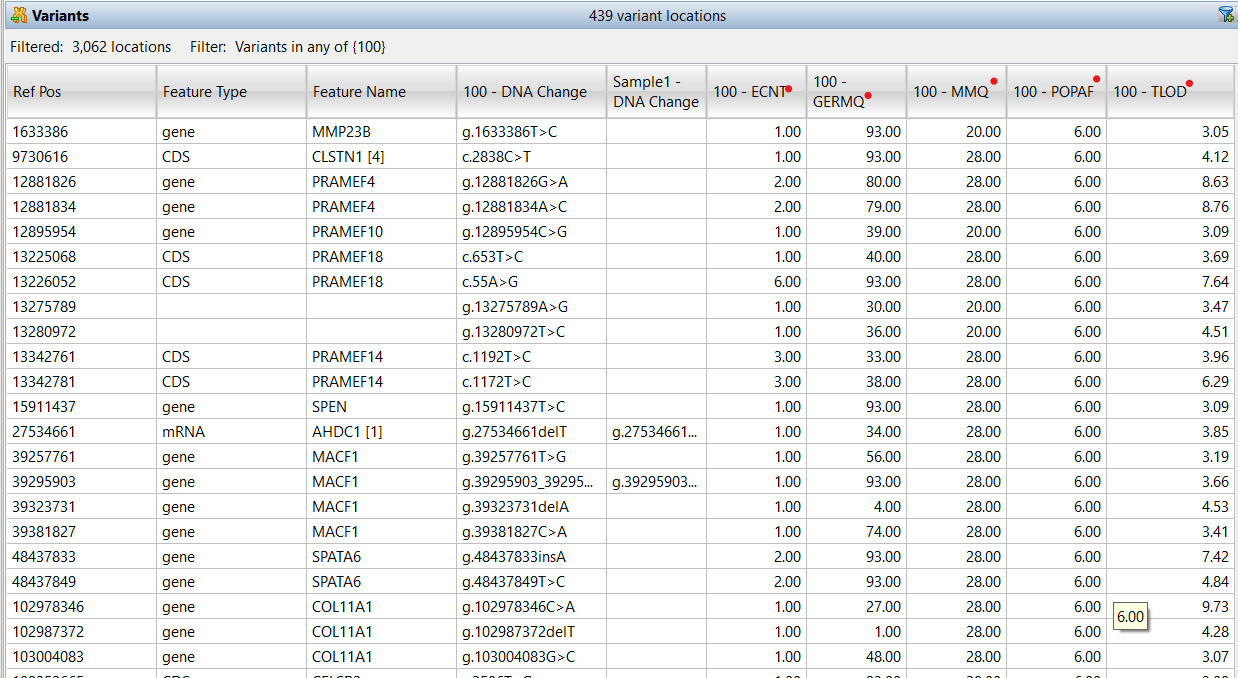
Mutect2 results are fully integrated into GenVision Pro, where you can explore your variants in depth. In addition to dozens of standard filters, four Mutect2-specific metrics allow for greater refinement:

  • GERMQ (Germline Probability Score) – probability that a variant is somatic rather than germline.
  • TLOD (Tumor Log Odds) – statistical confidence that a variant is true signal rather than background noise.
  • MAPQ (Mapping Quality) – confidence in the alignment of reads supporting the variant.
  • POPAF (Population Allele Frequency) – helps remove common germline SNPs, reducing false positives.

Together, these filters help pinpoint the true somatic mutations that matter.

Built for Ensemble Workflows

No single somatic variant caller is optimal for every dataset. Many researchers use ensembles of tools to improve accuracy, and Mutect2 is consistently included in these combinations. In fact, a 2025 benchmarking study comparing 20 somatic variant callers ranked Mutect2 among the top five individual performers and showed that ensembles including Mutect2 outperformed any single tool.

With GenVision Pro, you can import VCF files from other callers alongside your Mutect2 results to quickly identify concordant variants.

Somatic Caller Comparison Benchmarking Paper

  • A benchmarking study of individual somatic variant callers and voting-based ensembles for whole-exome sequencing

Why Choose Mutect2 in Lasergene?

  • Ease of Use – Run Mutect2 without command-line scripting, directly within a guided wizard.
  • Accuracy – Built on Broad Institute’s proven GATK technology, trusted worldwide in cancer genomics.
  • Integrated Visualization – Explore tumor and normal data side by side with unmatched clarity.
  • Flexibility – Supports both paired and tumor-only analyses, with automated GnomAD integration.

Get Started with Somatic Variant Calling in Lasergene REQUEST FREE TRIAL SCHEDULE A DEMO Bring the power of GATK’s Mutect2 into your Lasergene workflows.
Request a Free Trial or Schedule a Demo with our team to explore how Mutect2 can enhance your cancer genomics research.
computer

Questions?

Our team of scientists is here to help!

CONTACT US

Or call (866) 511-5090

Scientists

Would you like to receive technical tips and special offers straight to your inbox?

DNASTAR
Pricing Workflows Training Software Resources Contact Us

Would you like to receive technical tips and special offers straight to your inbox?

2026 - DNASTAR Privacy Policy
This website uses cookies to improve user experience and understand our web usage. By continuing to use our website, you consent to our use of cookies. Accept
Privacy & Cookies Policy

Privacy Overview

This website uses cookies to improve your experience while you navigate through the website. Out of these, the cookies that are categorized as necessary are stored on your browser as they are essential for the working of basic functionalities of the website. We also use third-party cookies that help us analyze and understand how you use this website. These cookies will be stored in your browser only with your consent. You also have the option to opt-out of these cookies. But opting out of some of these cookies may affect your browsing experience.
Necessary
Always Enabled
Necessary cookies are absolutely essential for the website to function properly. This category only includes cookies that ensures basic functionalities and security features of the website. These cookies do not store any personal information.
Non-necessary
Any cookies that may not be particularly necessary for the website to function and is used specifically to collect user personal data via analytics, ads, other embedded contents are termed as non-necessary cookies. It is mandatory to procure user consent prior to running these cookies on your website.
SAVE & ACCEPT