

• Software
    • DNASTAR Lasergene
      • Lasergene Molecular Biology
      • Lasergene Genomics
      • Lasergene Protein
  • Workflows
    • Molecular Biology Workflows
      • Automated Virtual Cloning
      • Clone Sequence Verification
      • ELN Integration
      • Gel Electrophoresis Simulation
      • Gene Homology Alignment
      • Multiple Sequence Alignment
      • Pairwise Sequence Alignment
      • PCR Site-Directed Mutagenesis
      • PCR Primer Design
      • Phylogenetic Analysis
      • Plasmid Maps
      • Sanger Sequence Assembly
      • Sequence Editing and Annotation
  • Protein Analysis
    • AI-Powered Protein Structure Prediction
    • Antibody Modeling
    • Antibody Phage Display
    • Epitope Prediction
    • Protein Docking
    • Protein Sequence Analysis
    • Protein Stability Prediction
    • Protein Structural Alignment
    • Protein Structure Analysis
  • Genomics
    • Clinical Research
    • De Novo Genome Assembly
    • Mauve Genome Alignment
    • Metagenomic Assembly
    • Variant Analysis
    • Viral Genome Analysis
    • Whole Genome/Whole Exome
  • Transcriptomics
    • ChIP-Seq Data Analysis
    • De Novo Transcriptome Assembly
    • RNA-Seq Alignment
  • Services
    • Protein Services
    • Genomic Services
  • Pricing
  • Resources
    • KNOWLEDGE CENTER
      • User Guides and Tutorials
      • Product Literature
      • Product Releases
      • Product Notifications
      • Supported File Formats
      • Technical Requirements
      • Citations
    • WEBINARS & EVENTS
    • BLOG
    • LICENSING OPTIONS
  • About
    • Careers
    • Distributors
    • Legal Information
    • Privacy Policy
  • Contact
  • Free Trial

Lasergene 19.0.2 Release Notes

REQUEST FREE TRIAL
MY ACCOUNT
DNASTARDNASTAR
  • Software
    • DNASTAR Lasergene
      Full Suite
    • Lasergene Molecular Biology
    • Lasergene Genomics
    • Lasergene Protein
  • Workflows
    • Molecular Biology
      • Automated Virtual Cloning
      • Clone Sequence Verification
      • ELN Integration
      • Gel Electrophoresis Simulation
      • Gene Homology Alignment
      • Multiple Sequence Alignment
      • Pairwise Sequence Alignment
      • PCR Site-Directed Mutagenesis
      • PCR Primer Design
      • Phylogenetic Analysis
      • Plasmid Maps
      • Sanger Sequence Assembly
      • Sequence Editing and Annotation
    • Protein Analysis
      • AI-Powered Protein Structure Prediction
      • Antibody Modeling
      • Antibody Phage Display
      • Epitope Prediction
      • Protein Docking
      • Protein Sequence Analysis
      • Protein Stability Prediction
      • Protein Structural Alignment
      • Protein Structure Analysis
    • Genomics
      • Clinical Research
      • De Novo Genome Assembly
      • Mauve Genome Alignment
      • Metagenomic Assembly
      • Variant Analysis
      • Viral Genome Analysis
      • Whole Exome/Genome Sequencing
    • Transcriptomics
      • ChIP-Seq Data Analysis
      • De Novo Transcriptome Assembly
      • RNA-Seq Alignment and Analysis
  • Services
    • Protein Services
    • Genomic Services
  • Pricing
  • Resources
    • KNOWLEDGE CENTER
      • User Guides and Tutorials
      • Product Literature
      • Product Releases
      • Product Notifications
      • Supported File Formats
      • Technical Requirements
      • Citations
    • WEBINARS
    • NEWS AND EVENTS
    • BLOG
    • LICENSING OPTIONS
  • About
    • Careers
    • Distributors
    • Legal Information
    • Privacy Policy
  • Contact
  • Search
  • Free Trial

Choosing the Right AI Algorithm for Your Protein Prediction Project

October 2, 2026 Events, Webinars

Webinar: Choosing the Right AI Algorithm for Your Protein Prediction Project

AI-powered protein structure prediction now extends beyond individual protein structures to modeling protein complexes, ligand interactions, protein-protein docking, and antibody-antigen binding. But different algorithms have different strengths and limitations.

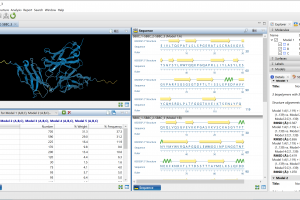
This webinar takes a technical look at the AI-powered structure prediction tools available in Lasergene Protein: Boltz-1 and Boltz-2, ESMFold2, OpenDDE, ColabFold, and ColabDock. Presenters Thomas Leary, Protein Product Specialist, and Erik Edlund, Protein Application Developer, discuss the pros and cons of each approach and demonstrate their uses with real data. 

  • Visualize, compare, and evaluate protein structure models
  • Interpret prediction confidence metrics and assess model quality
  • Analyze sequence variation and its structural impact
  • Generate predictions using Boltz and AlphaFold-Multimer
  • Leverage new batch prediction workflows to efficiently process larger sets of protein sequences
  • Use the new guided protein structure prediction workflow to simplify setup and streamline modeling

Request the On-Demand Webinar

Share
0

You also might be interested in

Q&A with Dr. Petar Grozdanov of Texas Tech University Health Sciences Center

Q&A with Dr. Petar Grozdanov of Texas Tech University Health Sciences Center

Dec 11, 2014

We chatted with Dr. Petar Grozdanov, Senior Research Associate in[...]

NovaDock AI AlphaFold Multimer

AlphaFold Multimer Webinar

May 6, 2024

In this webinar, Dr. Steve Darnell demonstrates how to predict the structures of multimeric assemblies using NovaFold AI-Multimer, within Protean 3D.

Cultivating Connections: From Plant Genetics to Customer Success
During a ski trip at Lutsen Mountain MN with colleague Thomas, Carl-Erik snaps a photo in front of Lake Superior.

Cultivating Connections: From Plant Genetics to Customer Success

Jun 6, 2025

With a Ph.D. in plant genetics and a passion for helping researchers succeed, Carl-Erik brings a unique blend of research expertise and customer care to our team. Whether supporting users through a global pandemic, collaborating with developers on software enhancements, or sharing a love of skiing and international cuisine with his family, Carl-Erik's journey is grounded in curiosity and connection.

1 Comment

Leave your reply.
  • Khandoker Md Rezwan
    · Reply

    October 21, 2026 at 10:58 AM

    This prediction model seems to be a really interesting prospect for future docking procedures. I really hope to learn it from this webiner

Leave a Reply

Your email is safe with us.
Cancel Reply

Would you like to receive technical tips and special offers straight to your inbox?

DNASTAR
Pricing Workflows Training Software Resources Contact Us

Would you like to receive technical tips and special offers straight to your inbox?

2026 - DNASTAR Privacy Policy
Prev Next
This website uses cookies to improve user experience and understand our web usage. By continuing to use our website, you consent to our use of cookies. Accept
Privacy & Cookies Policy

Privacy Overview

This website uses cookies to improve your experience while you navigate through the website. Out of these, the cookies that are categorized as necessary are stored on your browser as they are essential for the working of basic functionalities of the website. We also use third-party cookies that help us analyze and understand how you use this website. These cookies will be stored in your browser only with your consent. You also have the option to opt-out of these cookies. But opting out of some of these cookies may affect your browsing experience.
Necessary
Always Enabled
Necessary cookies are absolutely essential for the website to function properly. This category only includes cookies that ensures basic functionalities and security features of the website. These cookies do not store any personal information.
Non-necessary
Any cookies that may not be particularly necessary for the website to function and is used specifically to collect user personal data via analytics, ads, other embedded contents are termed as non-necessary cookies. It is mandatory to procure user consent prior to running these cookies on your website.
SAVE & ACCEPT