

Lasergene 19.0.2 is now available to download. This is a minor release for Lasergene 19.0 and introduces several enhancements for protein structure prediction in Lasergene Protein
Two New Protein Structure Prediction Algorithms:
AlphaFold2 with ColabFold
- We’ve replaced classic AlphaFold-Multimer (AlphaFold 2.3) with the ColabFold implementation of the same algorithm.
- ColabFold’s implementation replaces the slow JackHMMer multiple sequence alignment (MSA) step used by AlphaFold-Multimer with the same fast MSA approach as Boltz-2.
- Run predictions locally with NovaLocal or in the cloud with NovaCloud.
OpenDDE
- OpenDDE is an all-atom biomolecular foundation model that simultaneously models proteins, nucleic acids, ligands, and other molecular components as a unified 3D system.
- Supports optional multiple sequence alignments (MSAs) and templates to improve structural predictions.
- Can outperform AlphaFold3 on certain prediction tasks, particularly antibody-antigen (Ab-Ag) complexes.
- Run predictions locally with NovaLocal or in the cloud with NovaCloud.
New Protein-Protein Docking Algorithm:
ColabDock
- ColabDock is an AI-powered protein-protein docking algorithm for predicting the docked complex formed by two protein structures.
- Uses AlphaFold2 modeling and diffusion-based sampling without requiring sequence alignments or databases.
- Significantly outperforms older docking algorithms such as HADDOCK and ClusPro in predicting complex conformations.
- Run predictions locally with NovaLocal or in the cloud with NovaCloud.
Improved NovaCloud Computing Power
- Upgraded NovaCloud computing to an Amazon EC2 g6e.2xlarge instance with 8 vCPUs, 64 GiB of system memory, and an NVIDIA L40S Tensor Core GPU with 48 GB of GPU VRAM—a 2× increase in GPU memory.
- Increased the Boltz-2 prediction limit from approximately 1,100 to 1,700 amino acids.
Recommended action:
We recommend that all users update to Lasergene 19.0.2 to benefit from these enhancements.
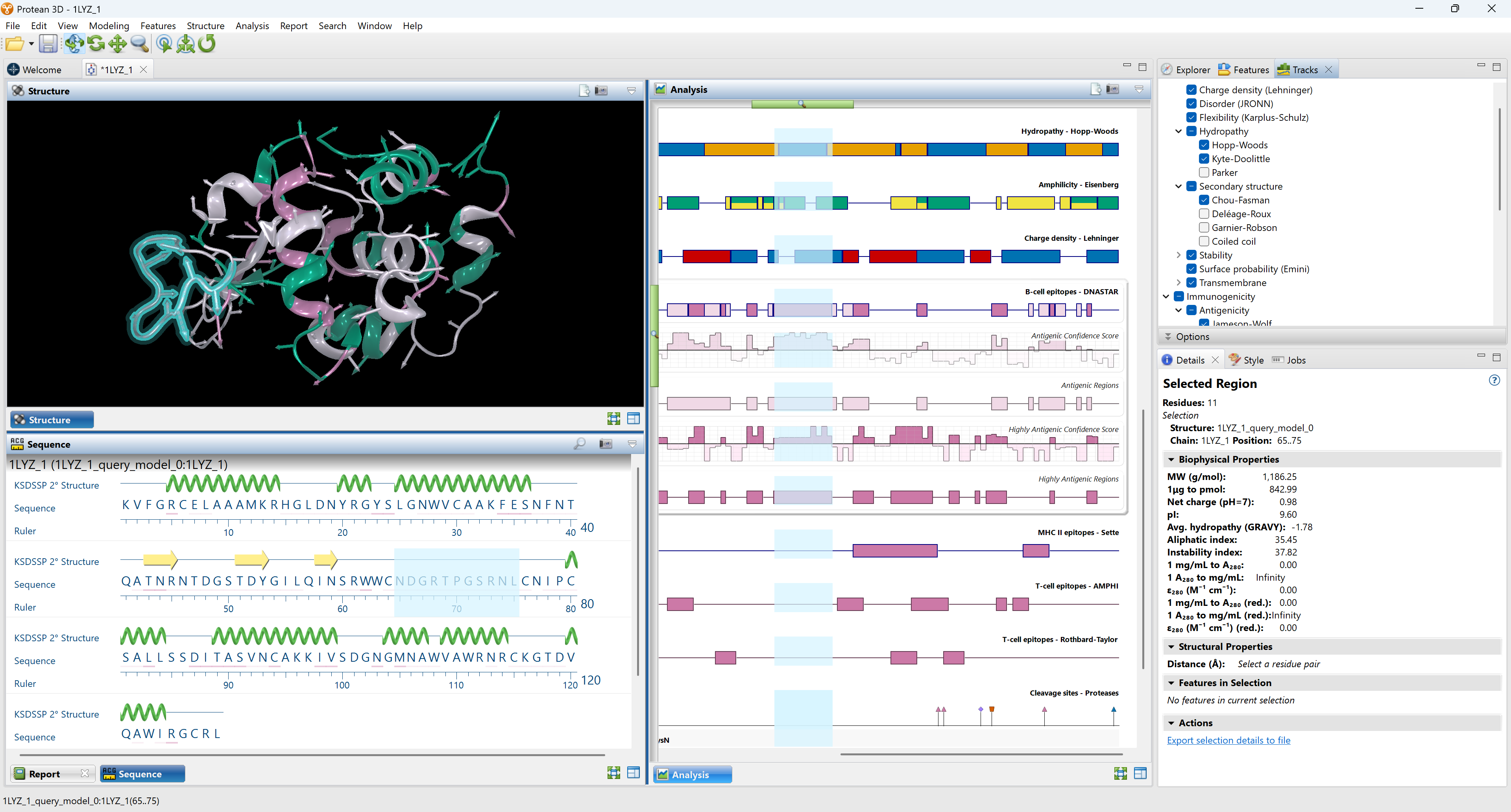
Figure 1: Protean 3D, the flagship application of Lasergene Protein.

Figure 2: Available protein modeling prediction algorithms now include ColabDock, OpenDDE, and AlphaFold2



Leave a Reply
Your email is safe with us.